rrpanama
Introduction
Global trade is not just about moving products across borders; it is about understanding where value exists and how to position products within the right markets.
Many businesses enter international trade with access to supply, but without a clear understanding of market dynamics. This often leads to poor pricing decisions, slow sales, and limited growth.
To operate successfully, businesses must learn how to identify opportunities, evaluate markets, and scale strategically.
1. Identifying Market Opportunities
Opportunities in global trade are not random; they are created where supply and demand do not align perfectly.
A strong opportunity exists when:
- A product is available at origin
- Demand exists in a different market
- Supply is limited or inconsistent in that market
For example:
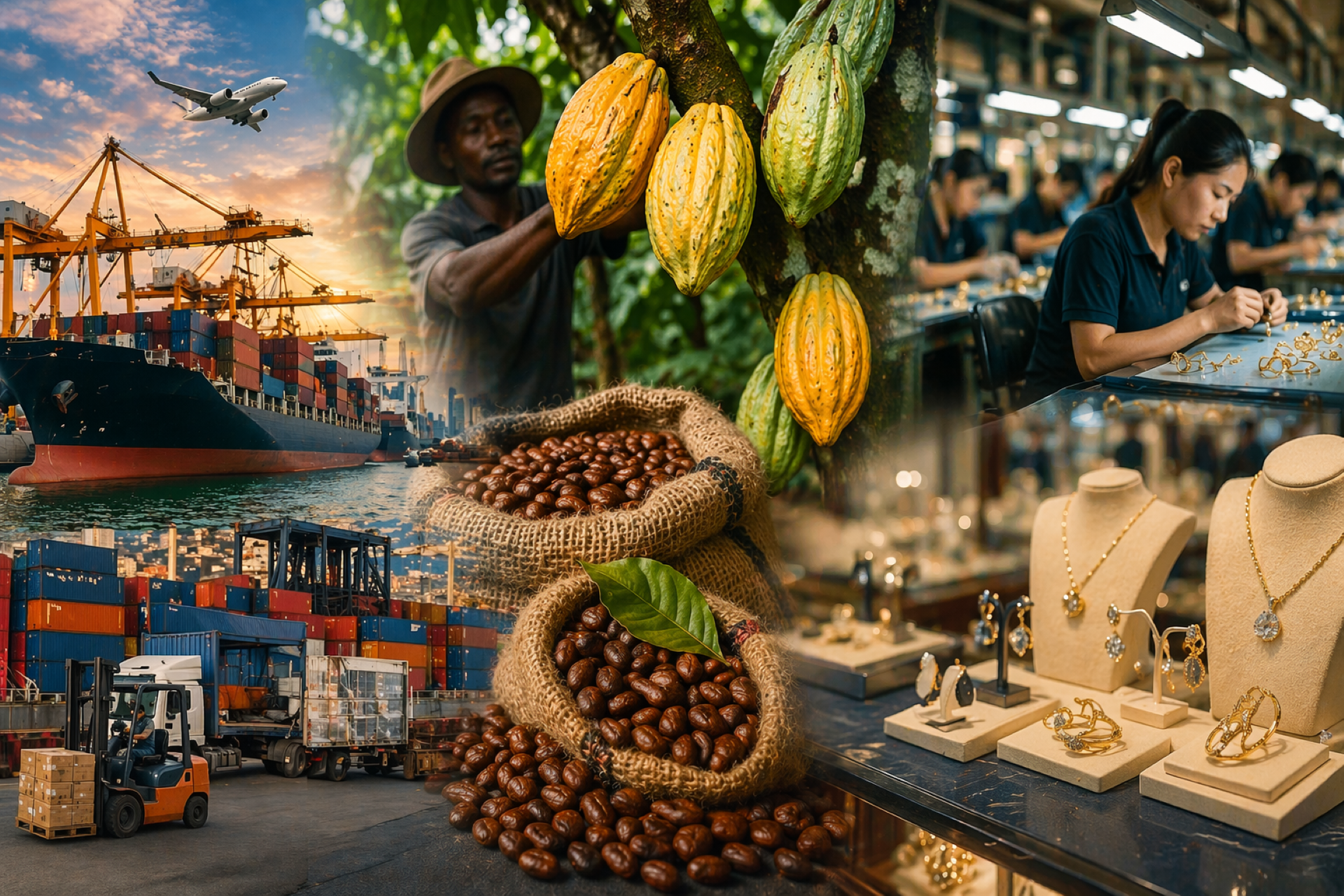
- Specialty agricultural products from Latin America may have strong demand in European markets
- Jewelry products sourced from China can perform well in African markets such as Tanzania when aligned with local preferences
The key is not just finding products, but identifying where they fit best.
2. Understanding Demand and Market Behavior
Every market behaves differently.
Factors that influence demand include:
- Income levels
- Consumer preferences
- Cultural influences
- Availability of alternatives
A product that performs well in one region may require repositioning in another.
For example:
- In some markets, customers prioritize price
- In others, quality, branding, and origin are more important
Understanding these differences allows businesses to adapt their approach rather than forcing the same strategy across all markets.
3. Evaluating Competition and Positioning
Entering a market without understanding competition creates risk.
Businesses should evaluate:
- Existing suppliers
- Price ranges
- Product quality levels
This helps determine how to position products:
- Compete on price
- Compete on quality
- Compete on differentiation
For example, generic products often compete on price, while products with clear origin or quality positioning can command higher margins.
Positioning defines how customers perceive value.
4. Pricing Strategy Across Markets
Pricing is not universal, it must be adapted to each market.
Key considerations include:
- Total landed cost
- Local purchasing power
- Competitive pricing
A product that is profitable in one market may not be viable in another if costs exceed acceptable price ranges.
Effective pricing requires balancing:
- Cost recovery
- Market acceptance
- Profit margin
This balance is essential for sustainable operations.
5. Scaling Through Structured Expansion
Growth in global trade should be intentional.
Many businesses attempt to expand too quickly by entering multiple markets without establishing stable operations.
A structured approach to scaling includes:
- Strengthening one market before entering another
- Securing reliable supply
- Building efficient logistics systems
For example:
A business sourcing products from China and selling in Tanzania may later expand into neighboring markets only after stabilizing operations.
Scaling without structure leads to operational strain and reduced quality.
6. Managing Risk in Global Markets
Global trade involves multiple risks:
- Currency fluctuations
- Supply disruptions
- Regulatory changes
- Market instability
Businesses must anticipate and manage these risks by:
- Diversifying supply sources
- Maintaining strong supplier relationships
- Monitoring market conditions
Risk management is not about avoiding challenges, it is about being prepared to respond effectively.
7. The Role of Strategic Partnerships
No business operates alone in global trade.
Strategic partnerships help:
- Improve sourcing efficiency
- Strengthen logistics coordination
- Provide market insights
Working with structured partners allows businesses to:
- Reduce operational complexity
- Improve decision-making
- Expand more confidently
Partnerships are often the difference between short-term activity and long-term success.
Conclusion
Global trade is driven by understanding, not just activity.
Businesses that succeed are those that:
- Identify the right opportunities
- Understand their markets
- Operate with structure and discipline
From sourcing products at origin to positioning them in the right markets, every step must be intentional.
Call to Action
Looking to expand into new markets with structured sourcing and reliable distribution?
Connect with us to explore strategic trade opportunities.