rrpanama
Introduction
Reselling in global trade is often seen as a simple activity: buy a product, add a margin, and sell it. In reality, profitable reselling is a structured business that depends on consistency, positioning, and control over supply.
Many resellers fail not because of lack of demand, but because they operate without a system. They rely on opportunistic buying, inconsistent suppliers, and unclear pricing strategies. This leads to unstable operations and limits long-term growth.
A successful reselling business is built on a clear foundation, reliable sourcing, strong market understanding, and disciplined execution.
1. Product Selection, Thinking Beyond Availability
The first decision a reseller makes is what to sell, and this decision defines everything that follows.
Many beginners choose products based on availability or price. However, sustainable reselling depends on selecting products that meet three key conditions:
- Consistent demand
- Stable supply
- Ability to differentiate
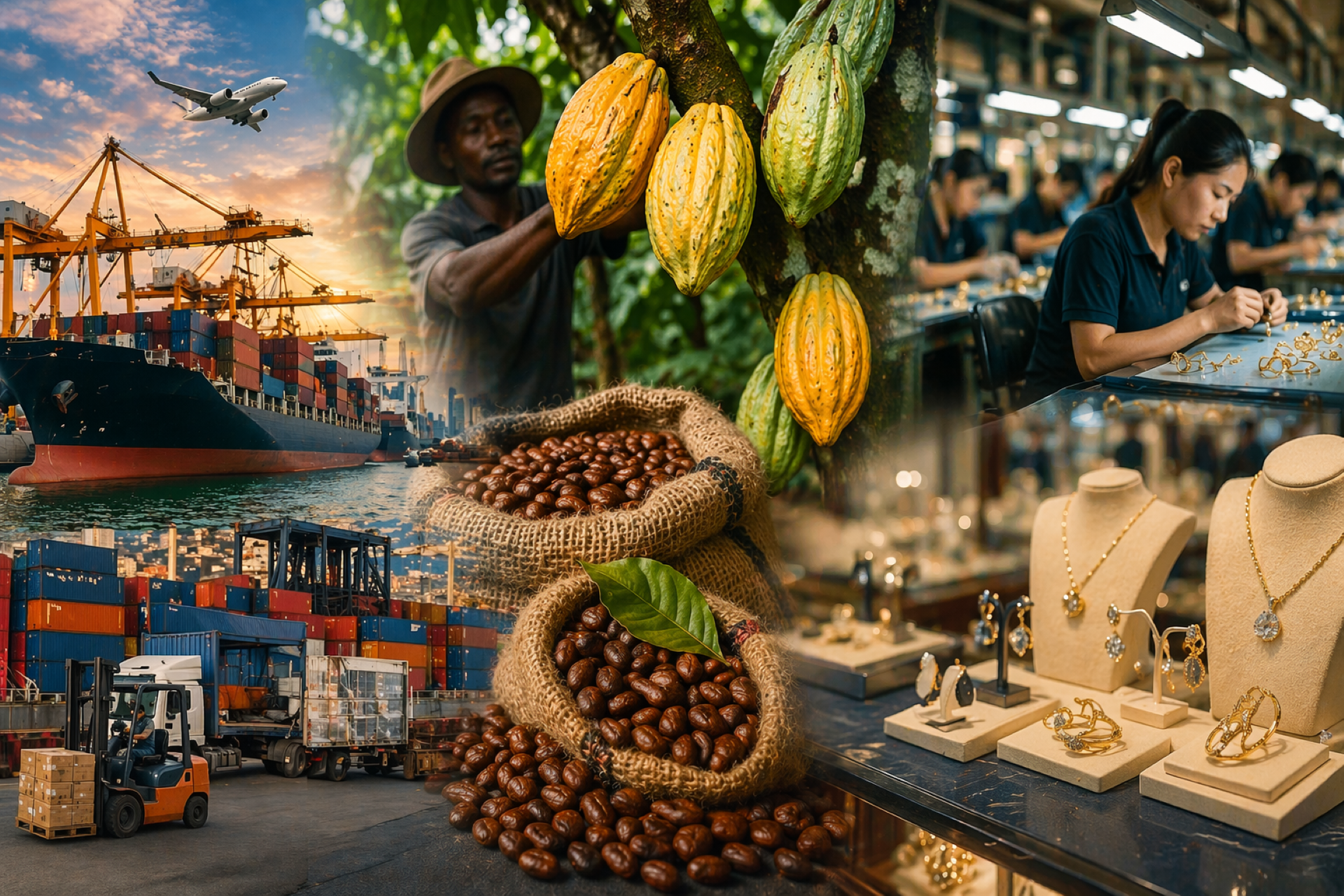
For example, natural products such as coffee and cacao offer differentiation through origin and quality. Customers are willing to pay more when they understand where a product comes from and how it is produced.
Similarly, jewelry products sourced from manufacturing hubs like China and sold in markets such as Tanzania can perform well when they match local preferences and maintain consistent quality.
The objective is not to chase trends, but to build a product base that supports repeat business.
2. Understanding Market Dynamics
Resellers do not operate in isolation—they operate within a market environment that defines pricing, demand, and competition.
Understanding your market requires answering key questions:
- Who is the target customer?
- What price range is acceptable?
- What influences buying decisions?
For instance, in some markets, price sensitivity is high, while in others, quality and branding carry more weight.
A reseller importing jewelry into Tanzania must consider:
- Local taste and design preferences
- Price accessibility
- Perceived value of imported goods
Without this understanding, even well-sourced products may fail to perform.
3. Building a Reliable Supply System
The most overlooked aspect of reselling is supply reliability.
Many resellers operate without stable sourcing, relying on different suppliers for each order. This creates inconsistency in quality, pricing, and availability.
A reliable supply system requires:
- Consistent suppliers
- Clear communication
- Defined quality standards
When sourcing is structured, resellers can:
- Maintain inventory stability
- Plan sales more effectively
- Build trust with customers
In contrast, inconsistent supply leads to lost sales opportunities and weak market presence.
4. Cost Structure and Profit Margins
Profitability in reselling is determined by understanding the full cost structure, not just the purchase price.
Key cost components include:
- Product cost
- Shipping and logistics
- Import duties and taxes
- Storage and distribution
Many resellers underestimate these costs, leading to reduced margins or losses.
A disciplined reseller calculates:
- Total landed cost
- Target selling price
- Acceptable margin range
This allows for controlled pricing decisions rather than reactive adjustments.
5. Positioning, Moving Beyond Price Competition
One of the biggest mistakes in reselling is competing only on price.
Price-based competition leads to:
- Lower margins
- Unstable customer loyalty
- Continuous pressure from competitors
Instead, strong resellers position their products based on value.
This includes:
- Highlighting product origin
- Emphasizing quality
- Ensuring consistent presentation
For example, coffee marketed with clear origin and quality standards carries more value than generic coffee. The same applies to jewelry, where presentation, packaging, and finishing influence customer perception.
Positioning allows resellers to protect margins while building brand recognition.
6. Logistics as a Core Business Function
Logistics is often treated as a secondary activity, but in global trade, it is a core function.
Efficient logistics ensures:
- Timely product availability
- Preservation of product quality
- Cost control
For example:
- Delayed shipments can disrupt sales cycles
- Poor handling can damage products
- Inefficient routing increases costs
Resellers must integrate logistics into their planning, not treat it as an afterthought.
7. Building Customer Trust Through Consistency
Long-term success in reselling depends on repeat customers.
Customers return when they experience:
- Consistent product quality
- Reliable availability
- Clear communication
Trust is built over time through repeated positive experiences.
Inconsistent supply or fluctuating quality breaks this trust quickly.
A structured reselling business focuses on delivering the same standard every time, rather than chasing short-term gains.
8. Scaling the Business Strategically
Growth in reselling should be controlled and intentional.
Scaling too quickly without stable systems can lead to:
- Supply breakdowns
- Quality issues
- Financial strain
A strategic approach to growth includes:
- Expanding product lines gradually
- Strengthening supplier relationships
- Improving logistics efficiency
Sustainable growth is built on stability, not speed.
Conclusion
Reselling in global trade is not defined by access to products, but by the ability to manage a structured system.
From product selection to sourcing, pricing, logistics, and customer trust, every element must work together.
Resellers who operate with discipline and clarity are better positioned to build profitable and sustainable businesses.
Call to Action
Looking to strengthen your reselling operations with reliable sourcing and structured supply?
Connect with us to explore partnership opportunities.